Download
🎧 Podcast Summary
Listen to the narrated summary of the paper:
Abstract
Advances in networking and computing technologies throughout the early decades of the 21st century have transformed long-standing dreams of pervasive communication and computation into reality. These technologies now form a rapidly evolving and increasingly complex global infrastructure that will underpin the next aspiration of computing: supporting intelligent systems with human-level or even superhuman capabilities. We examine how today’s distributed computing landscape can evolve to meet the demands of future users, intelligent systems, and emerging application domains. We propose a “periodic framework” for characterizing the distributed computing landscape, inspired by the systematic structure and explanatory power of the “periodic table” in chemistry. This framework provides a structured way to describe, compare, and reason about the behaviors and design choices of different distributed computing solutions. Using this framework, we can identify patterns in key system properties, such as responsiveness and availability, across the distributed computing landscape. We also explain how the framework can help in predicting future trajectories in the field. Lastly, we synthesize insights from leading researchers worldwide regarding the desired properties, design principles, and implications of emerging areas in the forthcoming distributed computing landscape and in relation to the periodic framework. Together, these perspectives shed light on the considerations that will shape the distributed computing landscape underpinning future intelligent systems.
Figure 1: A “Periodic Space” of Distributed Computing Landscape
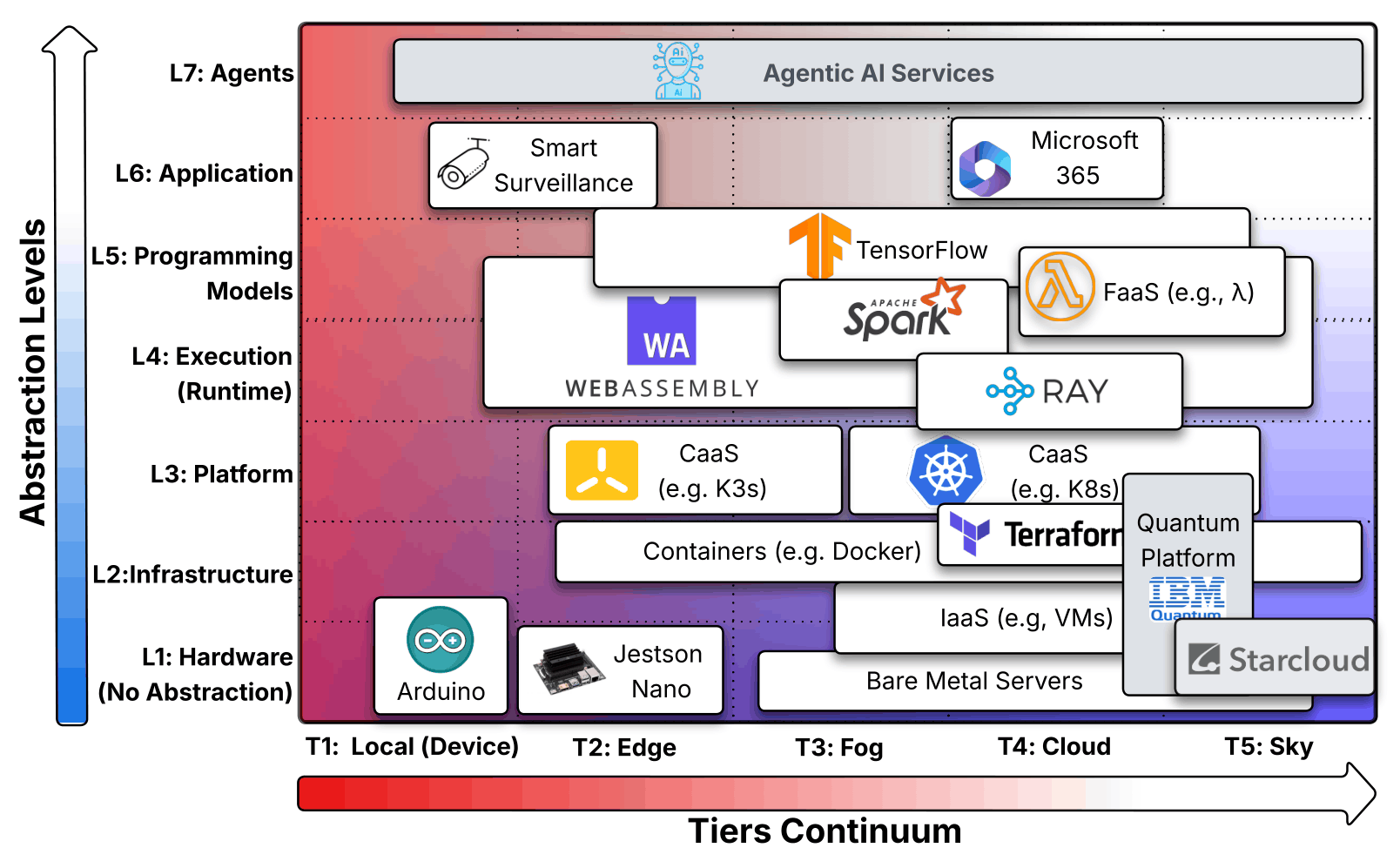
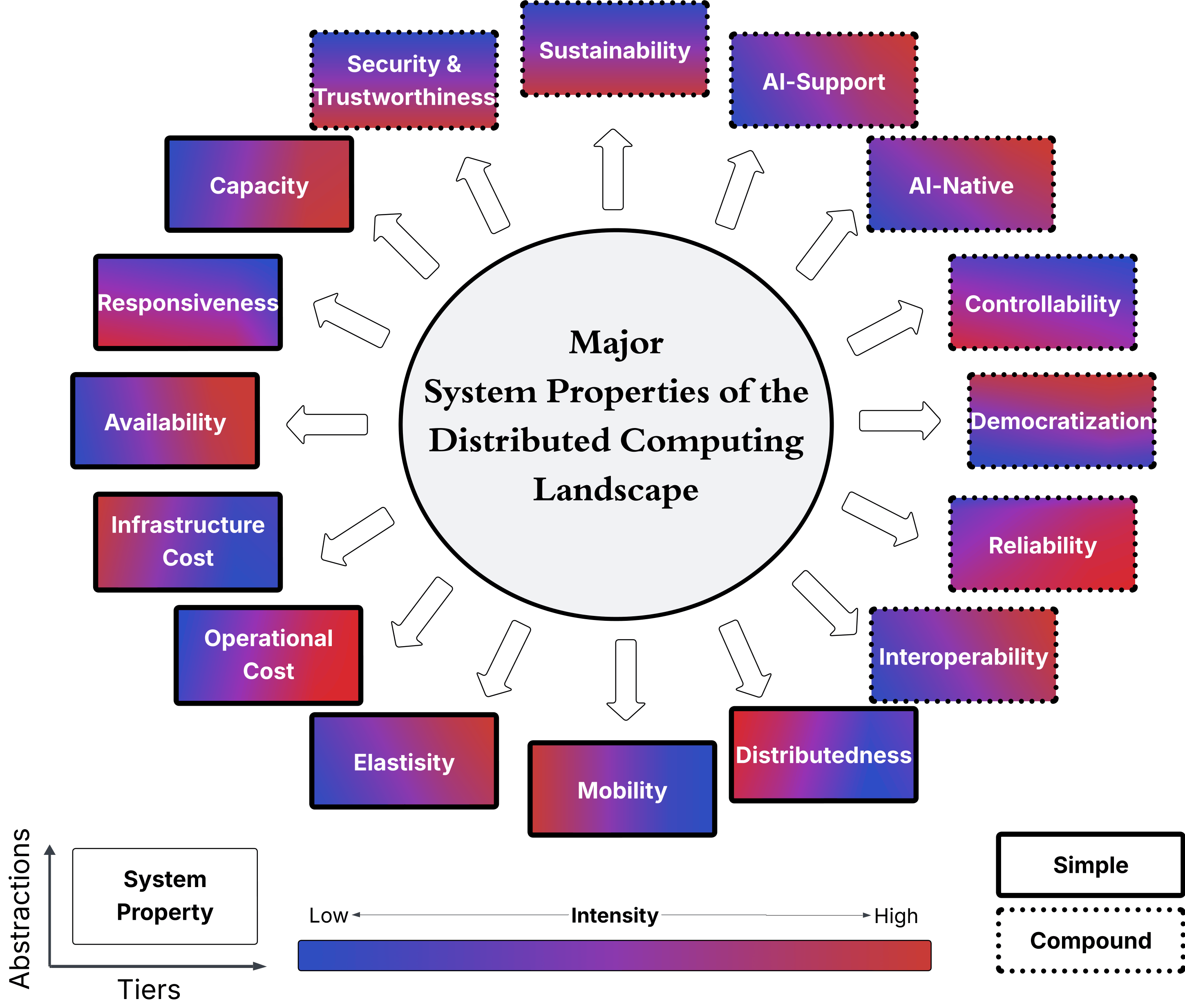
Figure 2: System Properties Across Computing Tiers and Abstraction Levels
Citation
@MISC{salehi2026periodicspacedistributedcomputing,
      title={A Periodic Space of Distributed Computing: Vision & Framework},
      author={Mohsen Amini Salehi and Adel N. Tousi and Hai Duc Nguyen and Murtaza Rangwala and Omar Rana and Tevfik Kosar and Valeria Cardellini and Rajkumar Buyya},
      year={2026},
      eprint={2604.12259},
      archivePrefix={arXiv},
      primaryClass={cs.DC},
      url={https://arxiv.org/abs/2604.12259},
}